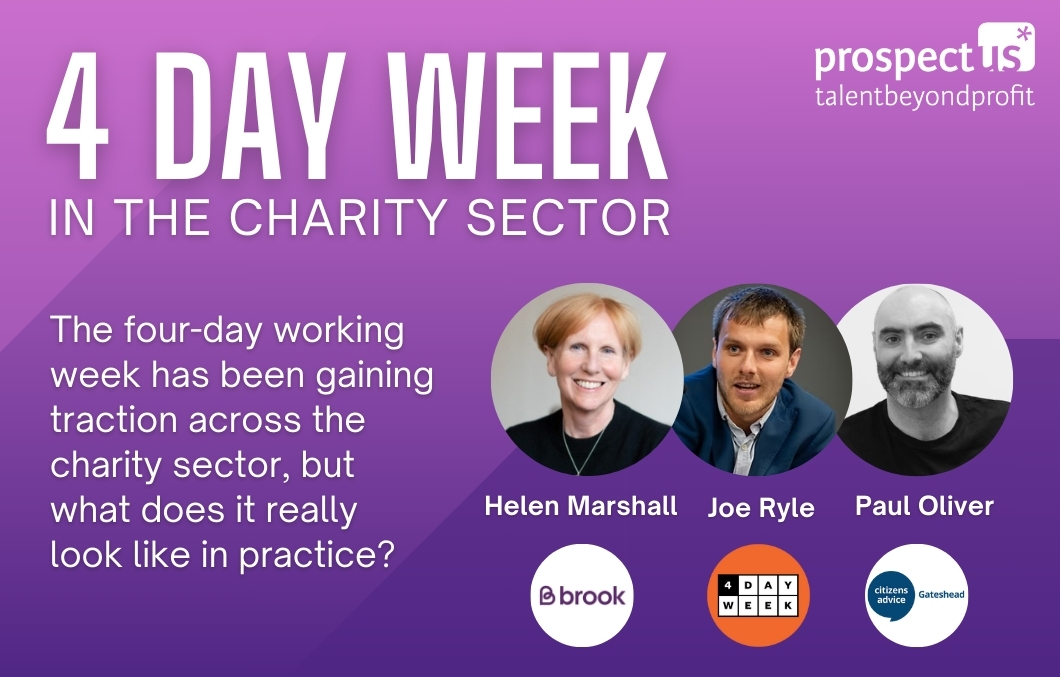

The four-day working week has been gaining traction across the charity sector, but what does it really look like in practice? We recently hosted a webinar with charity sector leaders who have successfully made the transition, sharing real-world insights on the challenges, benefits, and key considerations.
At Prospectus, we work with charities, social enterprises, and mission-driven organisations to help them build exceptional teams. We know that flexible working is a growing priority for many organisations looking to attract and retain talent while maintaining a strong impact.
To uncover first-hand insights into the challenges, benefits, and key considerations for organisations thinking of implementing the four-day week, we spoke with two sector leaders who have already made the transition.
Chaired by our Director of Executive Search (UK), Linda, our panel members included:
- Joe Ryle, Director at 4 Day Week Foundation, providing information, context and data on the initiative.
- Helen Marshall, Chief Executive at Brook and Paul Oliver, Chief Operating Officer at Citizens Advice Gateshead, who have both successfully introduced a four-day working week into their organisations.
Topics we covered:
- What motivated Helen and Paul to introduce a four-day working week
- How to overcome any barriers.
- How they engaged their boards in the decision.
- What the impact has been on staff, service delivery, and organisational culture.
- How to measure success of implementing a fur-day working week.
- What are the lessons learned, and any advice would they give to other charities considering this approach
Why This Matters for the Charity Sector
As a recruitment partner to not-for-profit organisations, we’re having more and more conversations about flexibility with both clients and candidates. In addition, recruiting and retaining great people is a key challenge in the not-for-profit sector. Many organisations are rethinking traditional ways of working to create more sustainable, people-focused cultures. A four-day week is one potential solution, but where do you start? How much to involve the board? How do you know it’s a success? Find out how the four-day week works in practice by watching the full webinar below.
Meet the Speakers

With 35 years’ experience working at senior level in the private and public sectors, Helen has a highly successful record in strategic development, social and economic regeneration, and driving new business.
Helen is proud to be Chief Executive of the charity, Brook, who work tirelessly to ensure young people’s lives are free from inequality, rich with opportunity and enriched by happy, healthy relationships.

Joe is Campaign Director of the 4 Day Week Foundation and Media and Comms Lead for the think tank Autonomy.
Formerly, Joe has been advisor to Shadow Chancellor John McDonnell MP and a former Labour Party Press Officer.
Joe is also author of The 4 Day Week Handbook.

Joining Prospectus in 2014, Linda has led Director and CEO level searches for Friends of the Earth, Youth Futures Foundation, UK Youth, Scout Association and Stonewall amongst many others.
As one of our most experienced consultants, she is responsible for practice and business development across the Executive Search Practice, leading the team of consultants, researchers and business support staff.

As Chief Operating Officer at Citizens Advice Gateshead, Paul is a strategic leader with a proven history of delivering successful organisational change in Retail, Charity and Social-Action Sectors.
Paul is skilled in leading people, digital transformation, omni-channel marketing /fundraising, analytics, planning and delivery of KPI-driven initiatives.
If your organisation is considering new ways to structure your workforce and would like to discuss recruitment strategies that support flexible working, do reach out to our team. We’re always happy to share our expertise and insights from working with charities across the sector.