


Recruiting the right charity CEO is critical for any organisation’s ongoing success and impact, and is one of the most important duties of a Board.
The CEO leads on strategy, sets the tone and cultural framework, and in most cases, is the main external voice. In the not-for-profit sector, this ambassadorial piece is particularly important. Charities are often speaking on behalf of people who are otherwise invisible or unheard.
Whilst the external aspects of the role are often prioritised, the internal and operational parts should not be ignored. There may be finance, fundraising and other experts on the Senior Leadership Team, but the Chief Executive is ultimately responsible to the Board. For further info on the Key Traits of a CEO in the Charity Sector visit our article here.
Our Executive Search Team support not-for-profit organisations by finding and appointing chief executives and other senior leadership roles. We work with a diverse range of charities from The Wildlife Trusts to Refugee Employment Network to Multiple Sclerosis Trust. These are organisations with different missions; they are of different sizes and complexities and have different stakeholders, beneficiaries, and dissimilar sources of income.
With this in mind, what are the common responsibilities of a CEO in the not-for-profit sector? Below are just a few examples of commonalities organisations are looking for when recruiting a CEO.
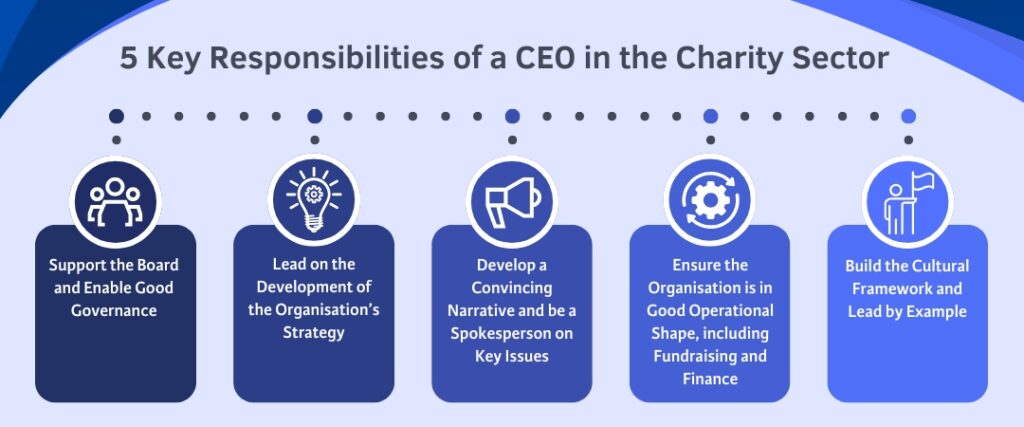
5 Key Responsibilities:
Supporting the Board and Enabling Good Governance
The Chief Executive’s role in the governance of a charity is significant. Mainly, they enable the Board fulfil its duties by providing a relevant and accurate record of activities and risks. They will also lead on ensuring regulation and financial elements are well managed, supporting the ongoing development of the Board.
Leading On The Development Of The Organisation’s Strategy
This is a critical part of the Chief Executive’s role. Together with the Board and Senior Leadership colleagues, they will ensure a coherent and mission-related strategy that takes account of external and internal challenges and opportunities. Seeking out new opportunities and having commercial acumen is increasingly important for Chief Executives.
Developing A Convincing Narrative and Being A Spokesperson On Key Issues
The Chief Executive must ensure mission focus and build the profile not only of the charity itself but more importantly, the issues the organisation seeks to challenge or support.
Ensuring The Organisation Is In Good Operational Shape, Including Fundraising and Finance
It is important that the Chief Executive balances the internal and external demands especially in an increasingly tough environment to raise income.
To Build The Cultural Framework and Lead By Example
This is a critical part of the Chief Executive’s role and can also be the one that’s most difficult to define. How the CEO leads their team, over and beyond structured management techniques, will have a huge impact. Do they inspire staff to follow them, or provide the right balance of support and clarity through tough periods?
This is by no means an exhaustive list but comes from nearly 70 years’ experience of placing exceptional talent into the not-for-profit sector.
There are many elements of a recruitment and appointment process that need to be managed well. Prospectus brings proven capability in all critical elements of a successful chief executive search. We work with organisations to shape the requirement, identifying and engaging the right individuals, supporting our clients in the appointments process. We also in advising on inclusive assessments and interview processes.
Our Executive Search Service goes beyond just filling a position; it’s about finding the perfect match between visionary leaders and not-for-profit organisations driven by purpose.