

As society continues to respond to equity, diversity and inclusion initiatives, we’re seeing how this is shaping how organisations invest in their own people strategy – specifically through a growing trend of roles specifically focused on diversity. This is something we have seen first-hand at Prospectus through working with organisations including Kew Gardens and WWF to appoint their diversity leads, so we wanted to share some of our research and thoughts on how to make a successful hire for your diversity lead.
Before we get into some of the practical steps, it’s useful to contextualise just how popular these roles are, and why we are seeing a candidate-short market within them.
Global trends in diversity-focused roles
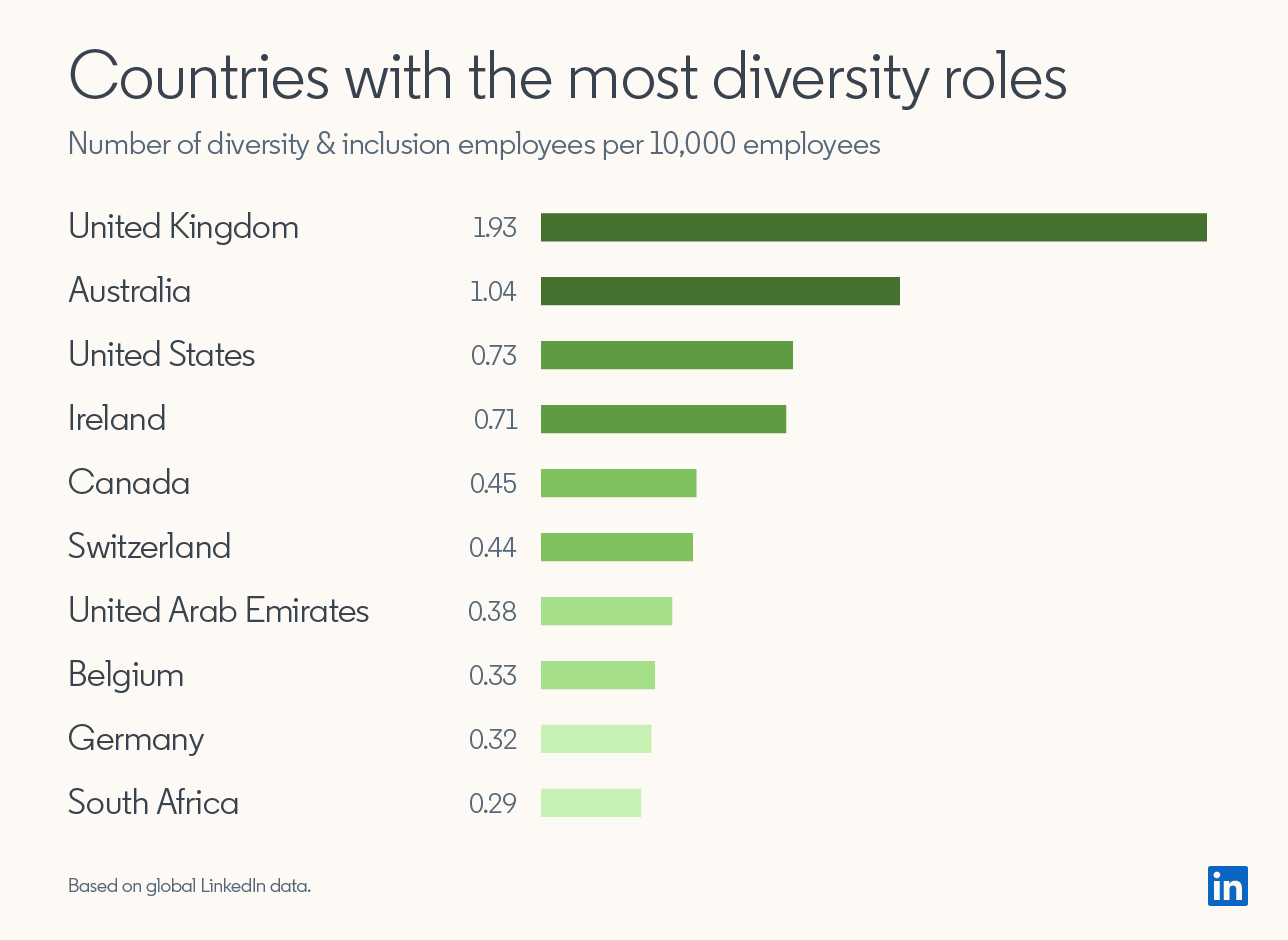
According to LinkedIn data, the number of people globally with the Head of Diversity title has more than doubled (107% growth) over the last five years. This trend is even more pronounced in the United Kingdom where we employ almost twice as many diversity specialists (per 10,000 employees) as any other country.
Diversity and Inclusion trends in the charity sector
If we bring the analysis to our sector, the results reflect that same trend. Our friends at Charity Job were kind enough to share their data which shows that “Head of Diversity” roles more than doubled in 2020-2021 versus the previous period, and in this 2021-2022 financial year there’s been as many roles posted in the first two months (April and May 2021) as there were in the whole of the previous 12 months! Interest has also increased with job views and clicks increasing over 100% to 1,033 views and 50 clicks to apply, compared with the 2020-2021 figures (April to March).
From a recruitment perspective, this is telling us we are entering into a market where there is a high demand for this type of candidate – what we would call a candidate-short market, which is comparable at the moment to areas such as Digital or IT.
So, how do you recruit talent in a candidate-short market? What are the points of difference you should include in your job description or advert that could make your role more appealing than a competitor?
Resources and expectations towards your diversity role
Firstly, be clear about what your expectations for this role are and the resources you are prepared to commit to achieve the change you seek. You cannot expect the appointee to turn up and change your culture overnight. You should consider what resources you make available to them, for example commissioning relevant training, and how you are going to empower them to make real change.
Think about how the role will connect to leadership
The empowerment point feeds into your consideration for how this role will be connected to senior leaders to affect change. Are they reporting into your CEO? Will they contribute to Trustee meetings to help influence the strategic goals for your organisation? Again, this is how they will be able to truly enact change.
Consider flexible/agile working (not the value it used to have!) vs. truly remote roles
Pre-pandemic, flexible working used to be a great tool organisations could leverage when they couldn’t compete on salary – with candidates really valuing it.
For example, a survey from Charity Digital two years ago identified that only 21% of candidates working in digital, another highly competitive space, listed salary and benefits as the most important thing to them when looking for a new role – with an organisation’s mission and cause (39%) and agile working/culture (26%) both scoring higher.
However, post-pandemic the leverage you would have got from offering agile working will not have the same currency, with many organisations now embracing this way of working. In a recent survey to Prospectus’ clients and candidates, it becomes clear that the pandemic has shifted perceptions of remote and flexible working, with 55% now saying their organisations have become more open to remote working and 24% more open to flexible working going forward.
Your point of difference could then be being open to truly remote working rather than just flexible options.
What salary should you pay your Head of Diversity?
This point is fairly simple – the more you pay, the wider your pool of candidates becomes. However, it is also one that there is often not a lot of wriggle room on! If this is the case, there are other options you can consider.
Consider a Part Time Head of Diversity
If you can’t flex the salary, can you make the role a 0.8 (i.e. 4-day week)? For example, if you only have a £50,000 budget for the role, making it a 0.8 reduces the need for a £62,500 salary, saving you £12,500 a year on the hire.
Is the job title for your diversity hire correct?
Salary is an important consideration and point of difference but this isn’t the case for everyone (case in point – the research from Charity Digital on flexible/agile working). So perhaps you could make the role a Director of Diversity instead of a Head of Diversity – or even an Assistant Director of Diversity.
At Prospectus, we see every day that when diversity is truly embraced and celebrated, it unleashes tremendous creativity and value for individuals, organisations and communities, with diversity of thought at the heart of this. Contact us below to speak to one of the team about hiring a diversity specialist for your organisation so to improve your own DEI agenda.