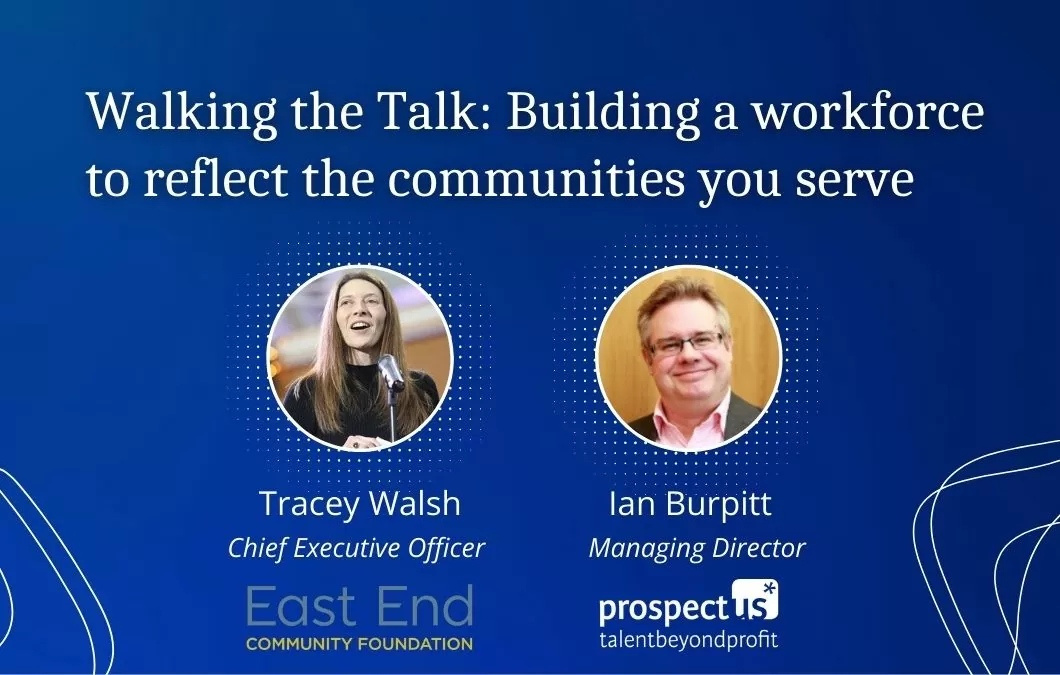

Having an inclusive recruitment process is key to a diverse workforce. In this interview, we chat to Tracey Walsh about her experiences as CEO of East End Community Foundation – a grant-maker situated within one of the most diverse and vibrant areas of London, yet where there is some of the highest levels of deprivation in the UK.
About East End Community Foundation
East End Community Foundation (EECF) is a grant-maker and philanthropy advisor dedicated to improving lives in Hackney, Newham, Tower Hamlets and the City of London. For over 30 years, EECF have built partnerships and invested in communities to make lasting change so local residents can access the wealth of opportunities that surround them. With a dedicated Board of Trustees and staff, EECF is at the heart of the community, of which they have a strong relationship with. Skilled at managing and distributing their funds, with thorough and transparent processes, donors trust EECF to target funds so they have the biggest impact in the East End of London.
Did you know?
The conversation
Hosted by Ian Burpitt, Managing Director at Prospectus, we were kindly joined by Tracey Walsh, CEO of East End Community Foundation to share her experiences of building community-driven workforce diversity.
Ian posed some questions to Tracey that covered:
- The challenges and opportunities Community Foundations have when trying to build a diverse workforce
- The role partners play in a recruitment process
- How to ensure recruitment processes are inclusive and accessible to candidates from your community
- The impact of a diverse Board
- What the future of a diverse workforce looks like, particularly in the grant-giving sector and the steps to stay ahead.
Watch the video below to hear the Tracey’s open and honest answers about EECF’s journey to creating a representative workforce through their recruitment.