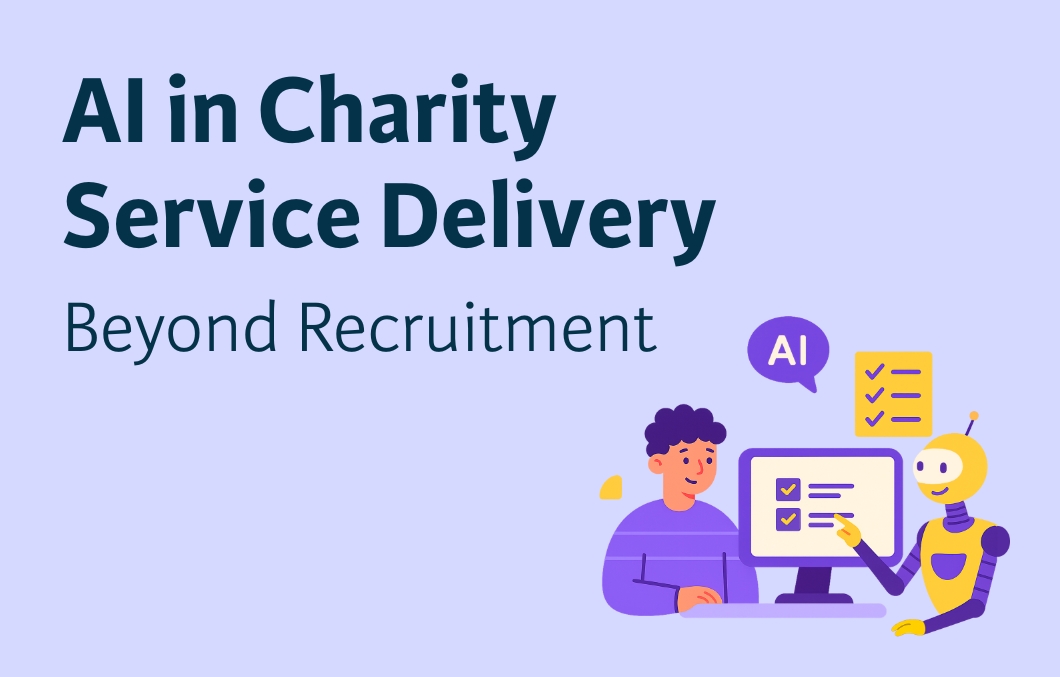

At Prospectus, we’ve been exploring how artificial intelligence is transforming the charity sector, from recruitment processes to frontline service delivery. Whilst our recent piece on Building an Ethical AI Recruitment Strategy for Charities focused on hiring, the potential for AI to enhance charitable impact extends far beyond finding the right people.
As the charity sector continues to face increasing demand for services alongside tightening budgets, AI presents opportunities to work smarter, reach more people, and deliver greater impact without losing the human touch that defines charitable work.
The Current Landscape:
AI adoption in the charity sector is accelerating rapidly. According to the Charity Digital Skills Report, 61% of charities used AI in 2024, up from just 27% in 2023. This growth reflects not just technological advancement, but a growing recognition that AI can amplify charitable impact when used thoughtfully.
However, for charities, the question isn’t just whether AI can improve efficiency – it’s whether it can do so while staying true to their values and maintaining the human connections that lie at the heart of their work.
Real-World Applications
Crisis Response and Emergency Services
United States: The American Red Cross has pioneered AI-driven service delivery through Clara, their disaster response chatbot that directly assists survivors by guiding them to essential resources and Red Cross services. Clara exemplifies how AI enhances rather than replaces human compassion, handling initial triage and information provision so volunteers can focus on complex cases requiring personal intervention. When disasters overwhelm traditional communication channels, Clara ensures critical support information remains accessible 24/7, serving as a vital bridge between those in crisis and the help they need.
Healthcare Access and Equity
United Kingdom: Moorfields Eye Hospital has introduced a ground breaking multilingual AI clinical assistant designed to break down language barriers in healthcare. This innovation ensures that language is no longer a barrier to accessing specialist eye care, demonstrating how AI can directly support equitable healthcare delivery – a perfect alignment of technology with charitable values.
Education and Community Support
South Africa: Khulisa Social Solutions is using AI to tackle violence, trauma, and substance abuse in schools by combining real-time artificial intelligence with community expressions through art, storytelling, and drama. Their platform analyses emotional themes to create instant dashboards that alert schools to urgent issues like bullying and mental health risks much faster than traditional methods. This community-centred approach extends beyond schools to include families and local leaders, demonstrating how AI can amplify local voices while driving systemic change.
Funding and Grant-Making
United Kingdom: The Wellcome Foundation is pioneering AI use in multiple areas, exploring how AI can enhance their grant-making process while simultaneously funding fundamental research on using generative AI to improve the measurement and treatment of anxiety, depression and psychosis. Importantly, they’ve established clear policies requiring the use of AI to be declared when applying for grant funding, showing how transparency can be built into AI adoption from the ground up.
Operational Efficiency
United Kingdom: AutogenAI is helping charities streamline their bid writing processes, using AI technology to improve proposal writing and help organisations win more funding bids. For resource-strapped charities competing for limited funding, this can significantly improve success rates whilst freeing up staff time for direct service delivery.
The Values-First Approach
What makes these examples compelling isn’t just their technical innovation. It’s how they demonstrate AI being used to amplify, rather than replace, human compassion and connection. Each application serves to:
Considerations for Implementation:
For charities considering AI in service delivery, several key principles emerge from these successful implementations:
1
Start with your mission
The most successful AI applications directly support charitable objectives rather than being technology-led innovations.
2
Maintain human oversight
In every example above, AI augments human decision-making rather than replacing it entirely. Whether it’s crisis counsellors, healthcare professionals, or community facilitators, humans remain central to the caring process.
3
Prioritise transparency
Being open about AI use builds trust with beneficiaries, funders, and the public across different cultural contexts and regulatory environments.
4
Consider equity implications
AI should reduce, not increase, barriers to accessing charitable services. This is particularly crucial when working across diverse socioeconomic and cultural contexts.
5
Embrace local adaptation
Global solutions must be flexible enough to respect and respond to local realities, as demonstrated by Khulisa’s community-centred approach in South African townships.
Looking forward
The charity sector’s global approach to AI offers lessons for all organisations grappling with these technologies. From the multilingual healthcare solutions in London to the community-driven school interventions in Cape Town, charities worldwide are demonstrating how AI can be implemented ethically and effectively by starting with values, maintaining human connection, and focusing on impact rather than efficiency alone.
As we continue to see innovation in this space, the principles of transparency, human-centredness, mission alignment, and cultural sensitivity will remain crucial for ensuring AI serves to strengthen, rather than diminish, the charitable sector’s vital work across diverse global contexts.
This article is part of our series on AI in the charity sector. You can also read our guide on Building an Ethical AI Recruitment Strategy for Charities for specific insights on using AI in hiring processes, and AI in Recruitment: What Candidates Need to Know for insights into how organisations are using AI in their recruitment processes.
At Prospectus, we’re committed to helping charities navigate the evolving digital landscape whilst staying true to their values. Whether you’re exploring AI for service delivery or recruitment, we’re here to support you with expertise and care.