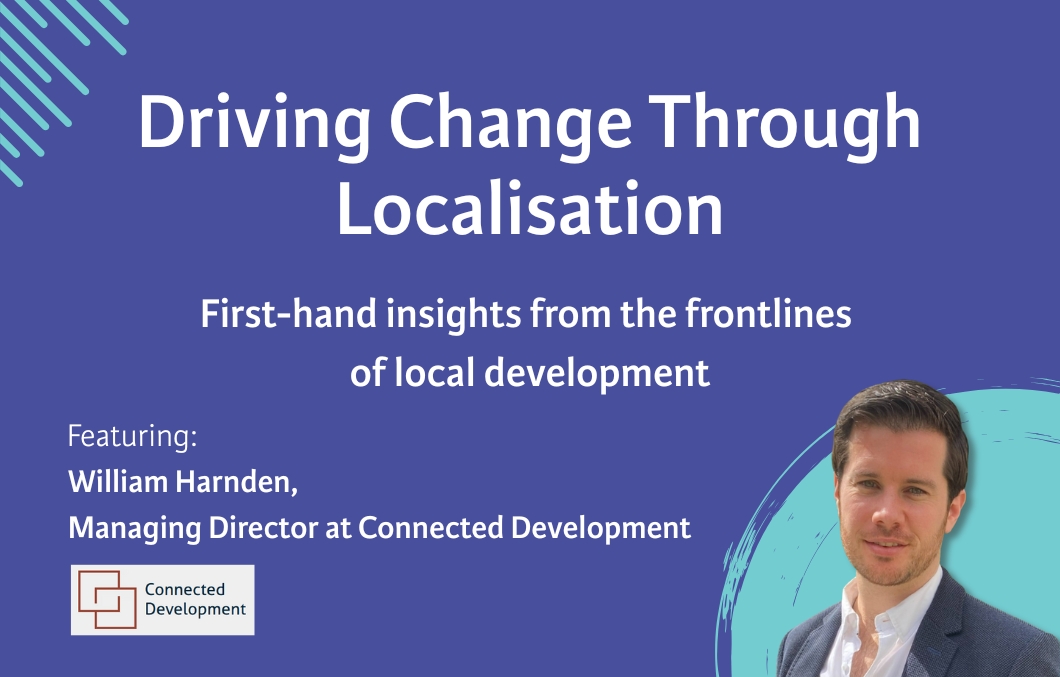

At Prospectus, we are committed to sharing valuable insights from professionals who are making a real difference in the not-for-profit sector. In this interview, we speak with William Harnden, Managing Director at Connected Development, about their experiences, challenges, and the impact they are driving in the Global Development Sector.
From engaging local stakeholders to adapting work styles, William offers a first-hand perspective on the power of localisation and the evolving landscape of the Global Development Sector.
About William Harnden:
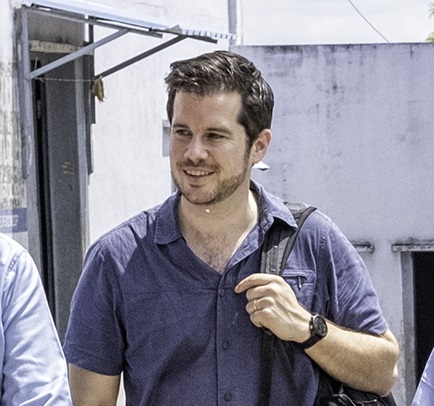
William Harnden has 15 years of international development and non-profit management experience from across the world. Formerly the CEO of a UK charity, Project Development Manager at an international non-governmental organisation (NGO), and Training Officer for a United Nations (UN) agency, he has undertaken long term international postings including Thailand (5 years) and Timor-Leste (3 years). His field experience now includes over 20 countries across Africa, Asia and the Americas. William brings all this operational knowledge of local and international NGOs, social enterprises, and the United Nations into consultancy assignments.



How did you engage with the community or stakeholders to understand their specific requirements and priorities?
At Connected Development we work specifically with local non-profit organisations that are selected to join our network due to having a community-based approach to their development programming. In order to identify what this kind of approach looks like, myself and the advisory group at the organisation each have 15+ years of experience working with various types of development organisations – from the largest to the smallest – and we use this experience to recognise highly impactful local programmes.
There is no ‘one size fits all’ definition of a community-based approach, but it typically involves the community having themselves identified and defined their needs, been heavily involved in the design of programmes, and that the community continue to ‘own’ the outcomes of the work for many years beyond the end of project funding.
How did you adapt your work style or strategies to align with the cultural norms and practices of the region?
We share knowledge between local non-profits based in 10 countries at the moment. Each organisation works in a unique context and on a specific challenge, so the key when sharing information is communication. Organisations can learn from each other and often are inspired by what they engage with the work of similar organisations based in different countries and regions. We find that this learning methodology is more effective, when coordinated carefully, than textbook learning.
What measures did you implement to ensure your work had a lasting impact on the community?
It is important to point out that Connected Development is not the organisation working directly with the communities. We reinforce the work of existing local non-profits by helping them to develop additional partnerships, learn from each other, and by providing an international platform for their organisation. We have measures in place to review and select organisations to join our learning network.
How have you empowered local teams or stakeholders to sustain the initiatives you’ve introduced?
We do not create the development initiatives, these are designed by the communities involved, hand in hand with locally based non-profits. The empowerment we create is around building confidence of local leaders to build partnerships with national and international stakeholders and helping them to design more effective tools to communicate what they do. Though these strategic partnerships, the impact of their community-based programmes can be scaled up.
How has working in this role influenced your perspective on the importance of localisation in Global Development?
When Connected Development started, our network was limited to Southeast Asia, where it was clear that several local organisations were delivering crucial, but often overlooked and underfunded work. Over the past 5 years, we have been on the ground and consulted with non-profits in several other countries: Colombia, Madagascar, Uganda, Kenya, Tanzania, and India. It has become clear that localisation – defined as the sector placing increased value on the role of local stakeholders in international development programming – is an issue of global importance.
Thanks so much for taking the time to speak with us William.
You can find more about our work in the global development space and our global recruitment appointments here. If you need recruitment support for a global development vacancy, contact us here.