
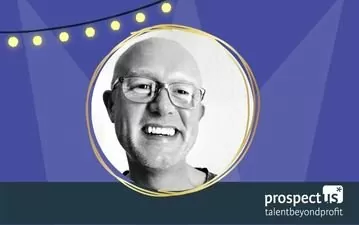

Welcome to our charity job spotlight series, where we shine a light on people and their great work in the charity sector. The series covers why they work in the sector; what their job involves; and career advice for those looking to either come into the sector or progress in their career.
Why have you chosen to work in Operations within the charity sector?
Prior to working in Homelessness, I had a dual career as a Hairdresser and Musical Theatre Performer, both of which I had enjoyed and achieved moderate success with. I had come to a point where I wanted to do something that made use of other skills I possessed, but were not being used. I wanted to do something that made a difference to the lives of other people (other than a haircut or singing them a song!).
In 2005 I applied to become a PCSO and was included in the first ever intake at City of London Police. The role was about being a bridge between the community and the Police, about doing the human things the Police didn’t always have the time to do. I completed the 3-month training, which was outstanding, but unfortunately the job was not entirely as described and not for me. During the PCSO training, I did a week’s placement at a homeless charity called The Passage in Westminster. After the first day I realised that this was a place where I would be able to develop the underused skills I had, and to help others move forwards in their lives. Soon after leaving the Police, I started volunteering at The Passage and have never looked back.
What do you think makes someone successful in your profession?
I think it is really important to be able to take feedback and criticism and use it positively. While it can sometimes be hard to hear when things haven’t gone well, or even when you thought they had and others don’t agree, this information is invaluable. Being able to depersonalise feedback and continue to actively encourage people to share their feelings is a very good method of seeing how the land lies, which in turn aids decision making. There is nothing worse, or even dangerous, than an Emperor’s New Clothes situation where everyone is saying what they think they should, and the important facts are overlooked.
What skill/s have you learnt in your career that have proven to be the most valuable?
I think one of the most useful skills I have learned / developed is knowing what to let go of in order to be able to focus on what is really important. This is not always as easy as it may seem because you need to have confidence and good judgement to be able to decide if something is important or not. Learning not to become overwhelmed and remain pragmatic when you are faced with a list of priorities, each demanding your full attention, is something that requires practice and discipline.
What did you personally find as the biggest challenges when making that step up into a ‘Head Of’ role?
One of the most challenging aspects in my ‘Head Of’ role is finding the right balance between strategic and operational working. This requires a flexible approach to thinking and communication. Being involved in strategic development, writing board reports, and developing partnerships, while at the same time having oversight of services and holding on to some of the details can be a tricky tightrope to walk.
What is your proudest achievement?
The achievement that I am most proud of to date is the Coproduction work I have led on at 999 Club. Developing and delivering a strategy to embed Coproduction at every level of the organisation and seeing that turn into a reality has been very rewarding. As well as a full range of coproduced activities and services, we now have a panel of current and former clients that have influence over the strategic development of the organisation. They communicate with our Board of Trustees and advise us on policy review. We are part of the Expert Link Coproduction project that has influenced Government policy, something that our clients will be able to continue to do through this involvement.
What advice would you give to anyone looking to make the move in to their first senior leadership role?
- Find an area of work that you are passionate about. It’s going to be really hard to maintain motivation if you don’t believe in what you are working towards.
- Build a network around you, both internally and externally. You will always need allies.
- Look after yourself – it’s a marathon, not a sprint.
Thanks so much for taking the time to speak with us, Rob.
If you would like to learn more about our work in the sector or would like to be featured in our series, you can contact us here.
Related Posts:
- Spotlight - Holly Green, HR & Organisational…

- Spotlight - Heather Chappell, Interim Associate…
- Spotlight - Guy Kassongo , Head of Finance,…
- Spotlight - Letty Thomas, Field Building & Networks…
- Spotlight - Jen Glyn, Head of Marketing and Communications
- Spotlight - Robert Kirton, Head of Finance, Big Issue Invest