
Welcome to our charity job spotlight series, where we shine a light on people and their great work in the charity sector. The series covers why they work in the sector; what their job involves; and career advice for those looking to either come into the sector or progress in their career.
Why have you chosen to work in finance in the charity sector ?
I like working in the charity sector because I can see the reality of practical generosity and helpfulness in action on a daily basis, generally toward the most vulnerable or disadvantaged segments of our society. As well as earning my living, working in Finance in Civil Society allows me to stay away from undue financial voracity in working to support good causes with a direct impact on beneficiaries. I feel it is my duty to deliver my work to the highest level of integrity, transparency and accountability. These are key features of my work ethic because I handle and manage the public’s hard-earned money for the furtherance of stated charitable objects. Charity finance applies the same principles found in any commercial organisation but there is some noticeable specificity, which makes it special. I think my heart and mind are in the crucial charity sector because it changes people’s lives directly.
What do you think makes someone successful in your profession?
One of the key success factors is to love and understand what you do – and to work hard. One needs to be ambitious and remain focused on their career goals while undertaking relevant training that keeps you aware of new regulations and developments in the sector. I have worked in charity financial management for 19 years. In fact, I joined the charity world in 2003 as a Finance Assistant at Bootstrap Company. Around 2012, I worked briefly for the Legacy Trust, where I implemented the full accounting system from scratch. I became Finance Manager at Timebank where I worked for nine years, and Head of Finance at Career Ready for over six years. From June 2022, I joined the Foundation for Future London as the Head of Finance. This is a more senior role where I provide strategic financial leadership and management, to enable the effective achievement of organisational objectives. I like the daily challenges and varied aspects of my role, which I see as a natural progression in my career.
What skills have you learnt which are the most valuable?
When I first come to the UK, I did not speak English and I was afraid of undertaking public presentations. Progressing toward more senior roles also meant being prepared to make presentations to various audiences such as the board of trustees, senior managers and other external stakeholders, which has sensibly improved my communication skills. I have also learned to tactfully balance accuracy and tight deadlines when managing expectations and prioritising tasks effectively.
What did you personally find to be the biggest challenge when making the step up to Head of Finance role?
I have now worked in the capacity of Head of Finance for over six years. When I first moved into that role, I found myself to be the main adviser on all financial matters, reporting directly to the Chief Executive. It’s always been difficult to move from my usual mindset of performing operational tasks to embracing a new mindset of strategic thinking. I was involved in starting a big project where I represented our charity in various public meetings and it was challenging to grasp new technical concepts and jargon e.g. consortia funding. I needed more preparation for each board meeting as I was not always confident about my ability to speak English clearly.
What is your proudest achievement ?
I can now speak English! I came to this country without knowledge of the English language. I am now highly qualified, with an MSc in Charity Financial Management and Accounting. Having been the Head of Finance in two successive great charities is a great and also noticeable achievement. I have achieved all this besides my busy family life and bringing up five children, as well as performing my pastoral work.
What advice would you give to anyone looking to make the move into their first senior leadership role ?
To make the move to a first senior leadership role, one must be willing to learn and be open to correction. Nobody knows everything and you have to use new challenges as opportunities for learning and development, as well as learning from your own mistakes. You need to capitalise on your most relevant strengths whilst identifying and working on your weaknesses. It is also important to subscribe to specialised publications and training opportunities that are available to charity workers at discounted prices. The Charity Commission’s website is also a valuable source of specialised information needed for effective financial leadership and management.
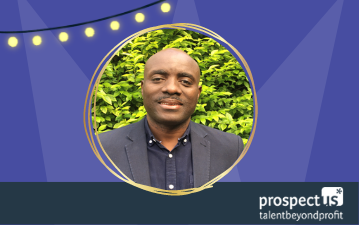
Thanks so much for taking the time to speak with us Guy.
If you would like to learn more about our work in the sector or would like to be featured in our series, you can contact us here.